What Is Crypto Liquidity Pool?
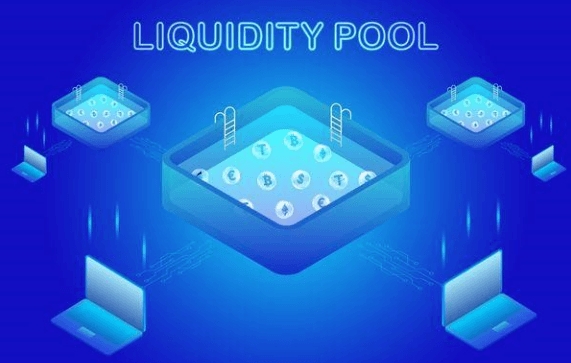
Crypto liquidity pools are smart contracts that hold reserves of two or more tokens to enable automated trading on decentralized exchanges. They use automated market making to set prices via constant-product formulas, allowing swaps without order books. Liquidity providers earn fees from trades, but face impermanent loss and risk from token price shifts. Different models exist, with governance and incentive structures shaping participation. The balance of capital efficiency, fees, and risk invites further examination of practical strategies and outcomes.
What Is a Crypto Liquidity Pool and Why It Matters
A crypto liquidity pool is a smart contract-enabled reserve of two or more tokens that enables automated trading on decentralized exchanges.
The arrangement supports crypto liquidity, enabling continuous markets while reducing manual intervention.
Its dynamics reveal pool economics, token incentives, and price impact; participants must weigh impermanent loss against potential gains, recognizing that efficiency hinges on disciplined capital allocation and transparent governance.
How AMMs and Tokens Work Inside a Pool
How do automated market makers (AMMs) and tokens operate within a liquidity pool? AMMs use constant product formulas to balance reserves, determining prices algorithmically. Tokens flow in, altering ratios and quotes; liquidity providers earn fees, enabling Liquidity mining. Traders face slippage, and Impermanent loss can arise when relative prices diverge. Mechanisms maintain liquidity, enabling decentralized exchange without order books.
Different Pool Models You’ll Encounter
Different pool models vary in structure, incentives, and risk profiles, shaping how liquidity is sourced, priced, and managed. They differ in fee schemes, asset composition, and governance. Liquidity incentives influence participation, while volatility exposure affects returns.
Some models mitigate impermanent loss through design choices; others accept it as a trade-off for capital efficiency and broader market access.
Practical Guide to Supplying Liquidity and Managing Risk
Effective liquidity provision requires a disciplined approach to capital deployment, risk assessment, and ongoing management.
A practical guide emphasizes diversified asset allocation, monitoring fees, and position sizing to optimize returns while controlling exposure.
Liquidity mining incentives can distort risk-reward, necessitating disciplined exit plans.
Impermanent loss remains a core consideration; active rebalancing and hedging strategies may mitigate potential opportunity cost and stabilize long-term performance.
See also: hdforhub
Frequently Asked Questions
How Are Liquidity Provider Rewards Taxed in Different Jurisdictions?
Liquidity provider rewards are taxed differently by jurisdiction; investors should consider understanding taxes, regulatory treatment, cross border issues, taxation timing, reporting requirements, and withholding rules to assess compliance and optimize tax outcomes.
What Are Impermanent Loss Scenarios in Extreme Market Moves?
Impermanent loss occurs when prices diverge during extreme market moves, causing temporary divergence between pooled tokens. In such conditions, value recovery depends on price reversion, liquidity duration, and fee earnings, with divergence risk persisting until markets stabilize.
Can I Remove Liquidity Partially Without Losing Rewards?
Partial withdrawal is possible; rewards eligibility may persist if the protocol permits proportional removal. The evaluation is data-driven: liquidity providers typically withdraw a portion and retain rewards proportional to their post-withdrawal share, subject to pool rules and timing.
Do Pools Support Leveraged or Synthetic Assets Beyond Base Tokens?
Pools generally do not natively support leveraged or synthetic assets beyond base tokens; however, leverage considerations and synthetic assets may be accessed via specialized protocols or derivatives layers, introducing added risk and capital requirements.
How Do Liquidity Pools Handle Protocol-Level Hacks or Failures?
Liquidity pools mitigate failures via risk management frameworks and formal governance processes; when hacks occur, mechanisms trigger circuit breakers, liquidity rescue plans, and parameter adjustments, while governance failures risk delayed decisions and uneven asset protection across participants.
Conclusion
In the end, the pool’s mechanics reveal a delicate balance of math and incentives. The constant-product formula, slippage, and fee economy shape exact outcomes as capital flows shift. Liquidity providers chase better yields while facing impermanent loss, risk, and evolving governance. Yet the system’s transparency and real-time pricing keep participants honest and informed. As traders move funds and new models emerge, the pool’s fate remains tethered to the unseen forces steering supply, demand, and capital efficiency.