
Do You Need 240V for a Home Sauna? A Wiring Primer
Most full-size sauna heaters, generally anything above roughly 3 kW, need a dedicated 240V circuit sized to the heater’s amperage, similar to what an electric dryer or range uses. Small infrared cabins under about 1.8 kW are the main exception and can often run on a standard 120V household outlet. Checking your specific heater’s electrical spec sheet before ordering is the only reliable way to know which category yours falls into.
120V versus 240V: what actually determines the requirement
The dividing line is heater wattage, not sauna size or style. A compact plug-in infrared panel system rated around 1.5 kW can run on a standard 15- or 20-amp 120V outlet, the same kind used for most household appliances. Traditional rock-filled heaters, and larger infrared setups with multiple panels, draw far more current, commonly 25 to 40 amps at 240V for a heater in the 6 kW to 9 kW range. Running that kind of load through a standard household outlet is not just against code, it is a genuine fire hazard, since 120V household wiring is not built to carry that much current safely.
Breaker and wire sizing by heater output
Heater manufacturers specify a minimum breaker size and wire gauge for each model, and this is not a place to estimate. A 6 kW heater commonly needs a 30-amp breaker and 10-gauge wire at minimum, while a larger 9 kW unit often steps up to a 40- or 50-amp breaker with 6- or 8-gauge wire, depending on the manufacturer’s exact spec and the run length. Voltage drop over distance matters too: a circuit run 50 feet from the panel may need a heavier gauge wire than the same heater installed 10 feet away, to keep the heater getting full rated voltage at the far end of the run.
What the installation actually involves
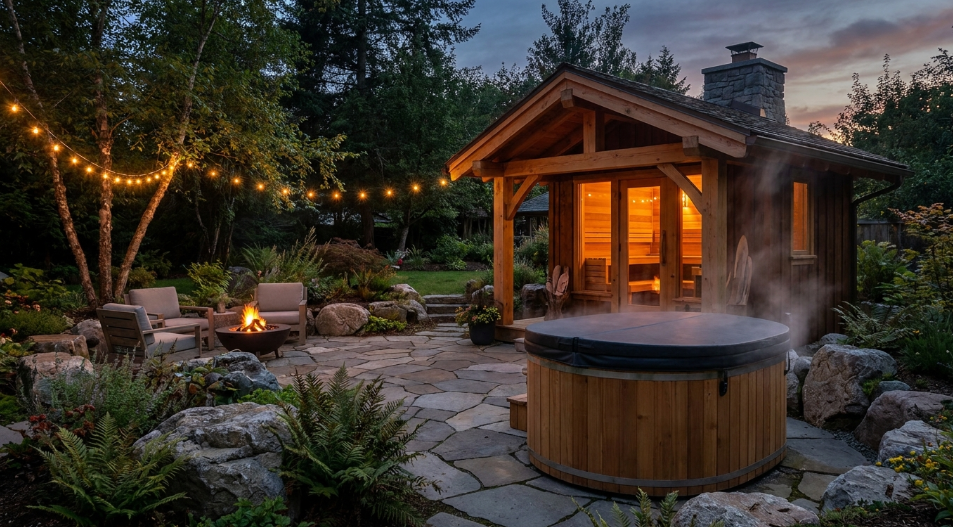
A licensed electrician pulls a new dedicated circuit from the panel, installs a breaker matched to the heater’s amperage, and runs wire to the sauna location, often terminating at a sauna-rated control box or timer mounted near or inside the cabin. For an indoor sauna close to the panel, this can be a same-day job. For an outdoor barrel or cabin, the circuit typically needs to be trenched and run through buried conduit rated for outdoor and underground use, which adds both material and labor cost tied directly to distance from the house.
What this costs, broken down
A simple 240V hookup for a sauna heater close to the electrical panel, with no trenching required, typically runs $400 to $900 for parts and labor. Add distance, and the number climbs: outdoor installations requiring 30 to 100 feet of trenched, conduit-protected wire commonly land between $1,000 and $2,500, and longer runs or difficult terrain can push past that. Permit fees, where required, usually add $50 to $200 on top of the labor quote. Getting two or three electrician quotes before ordering the sauna itself, with the heater’s exact amperage spec in hand, is the most reliable way to avoid a surprise on this line item.
Sauna listings do not always make heater amperage easy to find at a glance, which makes comparing electrical requirements across models more tedious than it should be. SweatDecks.com publishes heater wattage and circuit requirements alongside each model’s other specs, which is useful for pricing out the electrical work before committing to a specific cabin size and heater combination.
Why undersized wiring is not worth the shortcut
A heater run on an undersized circuit can trip breakers repeatedly, struggle to reach its rated temperature, and in the worst case create real fire risk from wiring that heats up under sustained load. Most manufacturers explicitly void the heater warranty if it is installed outside the specified electrical requirements, which means a shortcut here does not just risk safety, it also removes the protection that would otherwise cover a heater failure. This is one of the few places in a sauna project where cutting a corner has both a safety cost and a financial one.
It is also worth asking an electrician about panel capacity before assuming a new 240V circuit is a simple add. Older homes with a 100-amp panel that is already carrying an electric range, a dryer, and central air conditioning may not have headroom for another large 240V load without a panel upgrade, which is its own separate cost, often $1,500 to $3,500 depending on the region and whether the utility needs to upgrade the service line as well. Finding this out during the initial electrician consultation, rather than partway through the sauna installation, keeps the project on a predictable timeline.
Regular use is worth planning the wiring around
Getting the electrical right the first time matters more for a sauna than for most home appliances, because the appeal of the purchase is regular use, not occasional use. Review literature on sauna bathing has associated frequent use, often several sessions a week in the underlying research, with a range of cardiovascular and general wellness outcomes, though this is observational evidence and not proof that sauna use alone causes those results. A household planning to use a sauna three or more times a week has more reason to get the circuit sized correctly the first time than one expecting occasional use, since a heater that cannot reach full temperature reliably tends to get used less over time, not more.
Frequently Asked Questions
Does every home sauna need a 240V circuit?
No. Small infrared cabins and some compact heaters under about 1.8 kW can run on a standard 120V, 15- or 20-amp outlet. Almost any traditional rock-filled heater above roughly 3 kW needs a dedicated 240V circuit.
What size breaker does a sauna heater need?
It depends on the heater’s amperage draw, which the manufacturer specifies. Common ranges run from a 30-amp breaker for smaller 6 kW heaters up to 50-amp or larger for bigger 9 kW-plus units. Always match the breaker to the heater’s listed specification, not a guess.
Can I install a 240V sauna circuit myself?
Most jurisdictions require a licensed electrician for new 240V circuits, and most sauna manufacturers will not honor a warranty on a heater wired outside code by an unlicensed installer. Given the current involved, this is not a reasonable do-it-yourself project for most homeowners.
How much does it cost to add a 240V circuit for a sauna?
A straightforward run close to the panel typically costs $400 to $900. Outdoor installations requiring trenching, conduit, or a long run from the panel often land between $1,000 and $2,500 or more, depending on distance and local labor rates.
What happens if a sauna heater is wired with an undersized circuit?
An undersized circuit can trip breakers repeatedly, prevent the heater from reaching full temperature, and in a worst case create a real fire risk from overheated wiring. It also typically voids the manufacturer’s warranty, since heaters are rated for a specific amperage.
References
- Cardiovascular and Other Health Benefits of Sauna Bathing: A Review of the Evidence, Mayo Clinic Proceedings, 2018
- Benefits and risks of sauna bathing, The American Journal of Medicine, 2001
- Clinical Effects of Regular Dry Sauna Bathing: A Systematic Review, Evidence-Based Complementary and Alternative Medicine, 2018